

Aug 8th 2023 |
Chemical Spill Response: A Guide to Environmental Protection
Chemical spills can devastate the environment, wildlife, and human health. A research paper on Australia's National Maritime Chemical Spill Risk Assessment mentions an average of 215 accidents per year, resulting in 37 lives lost. Furthermore, the environment can suffer long-term impacts such as soil and water contamination if spills are not appropriately managed.
Proper response planning and implementation of best practices can minimise harm and prevent long-term damage. This guide provides an overview of chemical spill response in Australia, including risk assessment, emergency response procedures, spill containment, cleanup, and decontamination.
Understanding Chemical Spills
What are Chemical Spills?
Chemical spills are uncontrolled releases of hazardous chemicals into the environment, either as a solid, liquid, or gas. It can occur indoors or in the environment and is often identified with hazardous materials labels in a workplace. These spills can occur in various settings, such as waterways, railways, highways, and air. It commonly results from:
- Unsafe handling of chemicals
- Improper storage
- Tank ruptures
- Improper containers for disposal,
- Failure to dispose of chemicals on time
According to Job Safe SA, over 2000 Australian workers die every year as a result of occupational exposure to hazardous substances. The severity of a chemical spill and the ability to safely clean it up depend on factors such as:
- The hazards of the chemicals involved
- The spill's size
- The presence of incompatible materials
- The availability of proper training and supplies
Small chemical spills of low toxicity that do not present significant hazards can generally be safely cleaned up by laboratory personnel. While large spills involving highly toxic chemicals or occurring in public areas require specialised response and mitigation measures.
Chemical spills can severely impact the environment, wildlife, and human health, requiring effective response measures to minimise harm. The environmental impacts of a chemical spill depend on various factors, such as the type and quantity of chemicals spilled, the location, and the weather conditions.
Types of Chemical Spills
Chemical spills can be categorised based on various factors, such as the type of chemical involved, the location of the spill's impact, and the size of the spill. Here are some common types:
- Acidic and Alkaline Spills: These involve releasing acidic or alkaline substances that can cause severe burns and environmental damage.
- Oil Spills: One of the most well-known types, oil spills typically occur in water bodies and can have disastrous effects on marine life and ecosystems.
- Radioactive Spills: These involve releasing radioactive substances and require specialised response measures due to the long-term health risks of radiation exposure.
- Biological Spills: These spills involve releasing biological materials, such as bacteria, viruses, or other biohazardous substances.
- Toxic Chemical Spills: These involve releasing toxic or poisonous substances that can be harmful or lethal to humans, animals, and the environment.
- Flammable or Explosive Chemical Spills: These involve chemicals that can ignite or explode upon contact with a spark or high heat.
- Mercury Spills: Mercury is a toxic heavy metal that can accumulate in living organisms, causing severe health effects.
- Pesticide Spills: These involve the release of pesticides, which can contaminate soil, water, and harm non-target species.
- Industrial Chemical Spills: These spills often occur in industrial settings and can involve various chemicals used in manufacturing.
Regulatory Framework in Australia
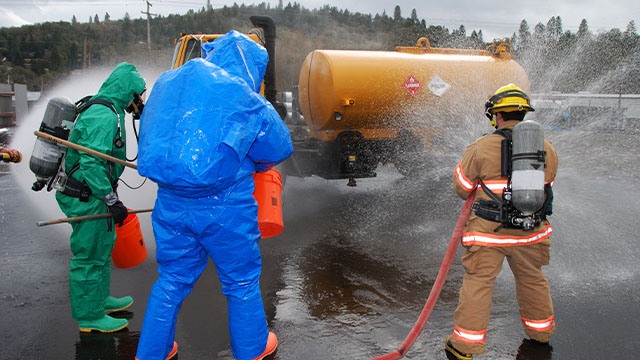
In Australia, the response to chemical spills is governed by several regulatory bodies and regulations. Here are some key examples:
- Work Health and Safety Regulation 2011: This regulation mandates that hazardous chemicals must be classified according to the globally harmonised system (GHS).
- Australian Standard AS NZS 4452-1997 - The storage and handling of toxic substances: This standard outlines the requirements for the storage and handling of toxic substances.
- Australian Standard AS 1940:2017 – The storage and handling of flammable and combustible liquids: This standard covers requirements for spill kits for Class 3 Flammable Liquids.
- Chemical Storage and Spill Response Guidelines: These guidelines by the New South Wales Transport Department outline the safety, environment, and regulatory requirements for managing chemical spills.
- Chemical Safety in the Workplace (WHS) Policy Guideline: This policy guideline outlines the Work Health and Safety Act 2012 (SA) requirements and its regulations for all SA Health workplaces.
These regulations and guidelines emphasise the importance of proper storage, immediate containment and management of spills, and the notification of relevant authorities when a major chemical spill ever occurs.
Impact of Chemical Spills
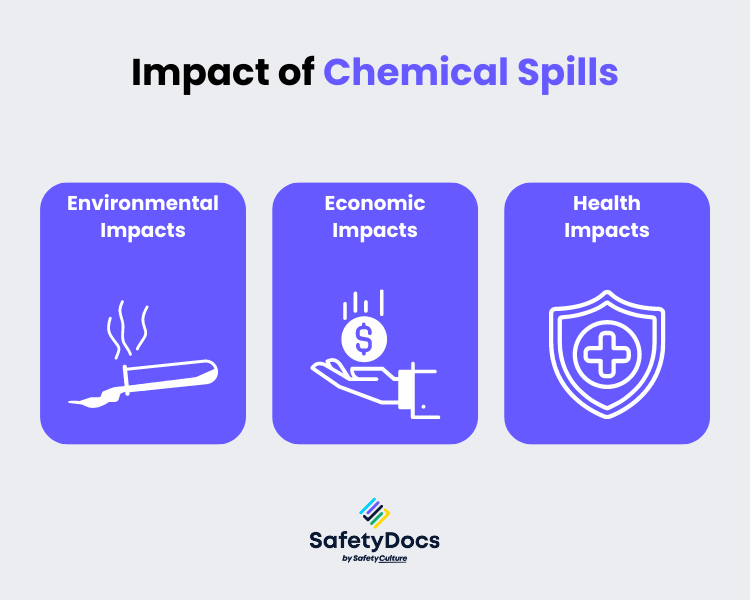
1. Environmental Impacts
Chemical spills can contaminate soil, water bodies, and air, leading to long-term health risks for humans and animals. They can also kill aquatic life, destroy habitats, and disrupt the food chain.
2. Economic Impacts
Cleaning up a chemical spill is a complex and expensive process. Companies can also face financial penalties if they fail to comply with environmental regulations, such as notifying authorities of spills or using proper disposal methods.
3. Health Impacts
Chemical spills can have long-term health impacts on humans and animals due to exposure to hazardous substances. They can cause skin irritations, respiratory problems, eye damage, and even death in severe cases.
Key Requirements for Hazardous Chemicals
Risk Assessment
Risk assessments can help when reviewing where improvements can be made. In many cases, it is the best way for a person conducting a business or undertaking (PCBU) to determine the measures that should be implemented to manage risks associated with hazardous chemicals effectively. A risk assessment helps identify workers who are at risk of exposure, the sources and processes causing that risk, and the control measures needed to be put in place.
Safety Data Sheets (SDS)
Chemical manufacturers, importers, and distributors are required to provide Safety Data Sheets (SDSs) for hazardous chemicals under the Hazard Communication Standard (HCS), formerly Material Safety Data Sheets (MSDSs). The SDS must contain detailed information on chemical properties, health hazards, precautions for safe handling and use, emergency procedures, and disposal methods.
Labelling
Ensuring the correct labelling of hazardous chemicals is a crucial aspect of workplace safety. Both the manufacturer and importer of a hazardous chemical are responsible for ensuring that it is correctly labelled as soon as possible after manufacturing or importing. The supplier of a hazardous chemical must also play their part and not supply the chemical to another workplace if they know or ought reasonably to know that it is not correctly labelled. As a person conducting a business or undertaking (PCBU), you must guarantee that hazardous chemicals, their containers, or the piping systems they are transported through are all correctly labelled.
Chemical Manifest
As a PCBU, it is important to prepare and maintain a chemicals manifest when the number of hazardous chemicals used, handled, or stored at your workplace exceeds the manifest threshold quantities. The manifest serves as a written summary that contains essential information about your workplace and the hazardous chemicals present. It is distinct from the hazardous chemicals register. The manifest plays a crucial role in assisting emergency services in the event of an incident within your workplace.
It should include details such as the quantity, classification, and location of hazardous chemicals within the premises, site plans, and emergency contact information.
Training
Workers who may come into contact with hazardous chemicals must receive appropriate training on how to handle them safely. This includes understanding the appropriate safety measures and procedures in place, how to read SDSs, and accident prevention. It is also important that workers are regularly updated on any changes or new substances being introduced into the workplace.
Strategies for Mitigating Chemical Spills
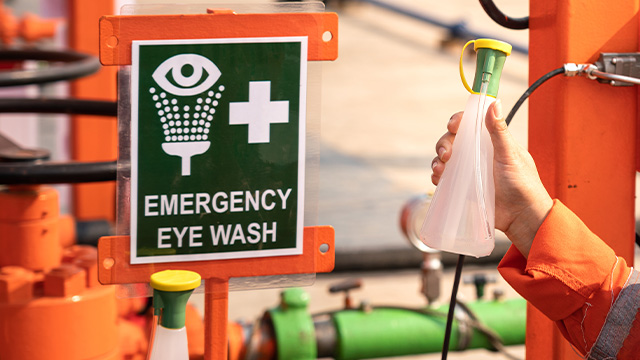
Knowing how to respond to a chemical spill is essential for preventing severe impacts. Here are some strategies for mitigating the effects of a chemical spill:
Identifying minor and major spills
Chemical spills can be categorised as either minor or major based on several factors. The type, volume, location and hazardous nature of the substance or spilled chemicals (as defined in the Safety Data Sheets) play a huge role in determining the spill's severity.
A major spill, for instance, involves the release of a type or quantity of chemical that poses an immediate health risk or involves an uncontrolled fire or explosion. In such cases, evacuation of the area or building may need to be considered. On the other hand, a minor spill refers to the release of a less hazardous chemical in small quantities that do not pose an immediate health risk and can be contained effectively without needing any support or evacuation.
When workers know what constitutes a minor and major spill, they can quickly identify the type of response that is necessary and take the right steps to contain it.
Spill Response Planning
A Spill Response Plan outlines the strategy for managing chemical spills in the workplace. An effective chemical spill response plan should be developed for the workplace and should include detailed instructions on how to respond in any situation. The plan should identify who is responsible for mitigating the spill, what resources are available, and what steps need to be taken. It should also include:
- Safety protocols: Safety protocols such as evacuation routes, emergency contacts, an emergency response team, and appropriate safety equipment should all be outlined in the plan.
- Spill kits: Spill kits are an essential part of any spill response plan. Spill kits contain materials such as absorbent pads, gloves, safety goggles and other necessary supplies to help clean up the spill and protect workers from exposure to hazardous substances. Selection and placement of spill kits should be based on the chemical register, the risks present in each area, and work activities.
- Spill response procedures: The procedure should specify the necessary steps to be taken, such as notifying relevant authorities, containing the spill, cleaning it up, and disposing of any hazardous materials safely.
Control the source of the spill
If a spill happens, the source must be stopped immediately. Shut off valves, close storage containers, and stop the flow of chemicals into the area. This is one of the most important strategies to control the source of the spill to prevent the further release of chemicals into the environment.
Containment and clean-up
Once the source is controlled, containment and cleanup measures must be taken to minimise further contamination. This includes using absorbent materials to soak up spilled chemicals, covering the spill with a plastic sheet, and disposing of contaminated materials according to regulations.
Some ways to contain the spill include using absorbent materials such as sorbent pads, vermiculite, or dry sand.
Isolate the affected area
If appropriate, isolate the area to prevent people and animals from coming into contact with the chemical spill. This is necessary when dealing with major spills that pose an immediate health risk.
Clean up the spill
Once the spill is contained, it's important to clean up the spill using appropriate techniques and equipment. A professional environmental clean-up service provider should be consulted for the spill cleanup and large spills.
SafetyDocs for Developing Your Chemical Spills Response Procedure
Developing a full spill control system to effectively manage chemical spills is essential for protecting workers and the environment from the harmful effects of hazardous chemicals.SafetyDocs by SafetyCulture offers safety documents for mitigating any health and safety risks involving hazardous chemicals, including spill response.
SafetyDocs is Australia's go-to provider of essential safety documents such as policies, checklists, and procedures to help you maintain a safe work environment. We can help make sure your workers are aware of the risks posed by hazardous chemicals. Begin by using these documents:
- Chemical Spill Emergency Response Plan
- Emergency Response Procedure - Hazardous Chemicals/Substances
- Chemical & SDS Register
- Chemical Manifest
Contact us today to get started on developing your chemical spill response system. We are here to help you stay compliant and protect your workers from hazardous chemicals.
Our team of experts is dedicated to providing accurate and informative content. Craig Cruickshank, our senior HSEQ advisor at SafetyDocs by SafetyCulture has reviewed this blog post to ensure the highest level of quality.
Learn more about Craig's work on LinkedIn for more industry insights.
Available for instant download and supplied in fully editable MS Word format for use in your business.
Please note that the above information is provided as a comment only and should not be relied on as professional, legal or financial advice.
Share This Article